SERP Checker: The Complete Guide to Tracking Google Rankings Like a Pro
SERP Checker: The Complete Guide to Tracking Google Rankings Like a Pro
If you want to win in organic search, guessing your keyword position is not enough. You need real data. That’s where a SERP Checker becomes essential. Whether you are a blogger, affiliate marketer, SaaS founder, or agency SEO specialist, tracking your search engine ranking position is one of the most important metrics for growth.
In this in-depth guide, we will explain what a SERP Checker is, how it works, why it matters for SEO strategy, and how to use it effectively to outrank competitors.
What Is a SERP Checker?
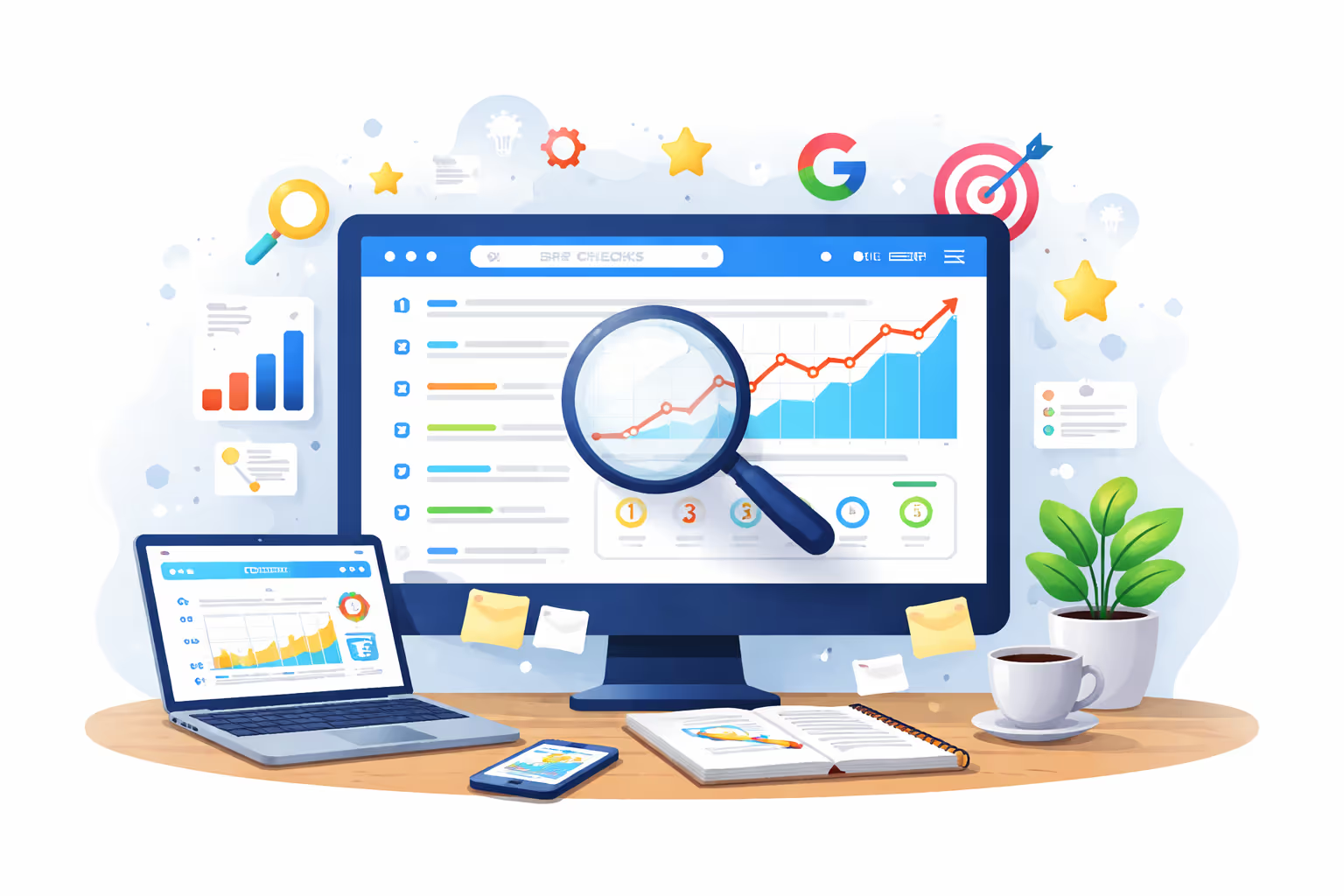
A SERP Checker (Search Engine Results Page Checker) is an SEO tool that allows you to check where your website ranks in Google search results for specific keywords. Instead of manually searching in an incognito browser, a SERP Checker gives accurate, location-based, device-specific ranking data.
Why SERP Tracking Matters for SEO
Search engine rankings directly affect traffic, conversions, and revenue. If your keyword drops from position 3 to position 9, your click-through rate can decline dramatically. Monitoring ranking changes helps you:
- Detect algorithm update impact
- Analyze competitor movement
- Optimize underperforming content
- Improve CTR using better meta titles
- Measure SEO campaign success
How a SERP Checker Works
A SERP Checker simulates a search query in Google and retrieves ranking data based on:
- Keyword
- Country or city location
- Device type (desktop or mobile)
- Language
Advanced tools also show domain authority, backlink profile, and estimated traffic.
Key Features to Look For
- Real-time keyword ranking updates
- Local SERP tracking
- Mobile vs desktop results
- Competitor comparison
- Historical ranking data
- SERP features detection (Featured Snippet, People Also Ask, etc.)
How to Use SERP Data to Increase Traffic
Ranking data alone means nothing unless you act on it. Here is how to turn data into growth:
1. Improve Meta Titles for Higher CTR
If you rank position 5 but CTR is low, optimize your title. Use power words, numbers, and clear benefit-driven messaging. Link tools Google SERP Checker
2. Optimize On-Page SEO
Add semantic keywords, improve internal linking, and update outdated statistics.
3. Analyze Competitor Pages
Study top-ranking pages and identify missing content gaps in your article.
4. Target Long-Tail Keywords
Long-tail keywords often convert better and are easier to rank.
SERP Checker vs Manual Checking
Manual searching is inaccurate due to personalization and browsing history. A SERP Checker provides unbiased ranking data and scalable tracking for hundreds of keywords.
Common Mistakes to Avoid
- Tracking too many irrelevant keywords
- Ignoring search intent
- Not tracking mobile rankings
- Panicking over small ranking fluctuations
Best Practices for Long-Term SEO Growth
- Track rankings weekly
- Combine ranking data with Google Search Console
- Focus on content quality over keyword stuffing
- Build high-authority backlinks
Conclusion
A SERP Checker is not just a rank tracker. It is your SEO compass. With accurate data, strategic optimization, and consistent monitoring, you can turn search visibility into sustainable revenue.
Read Also:
Popular Posts





Popular Tools