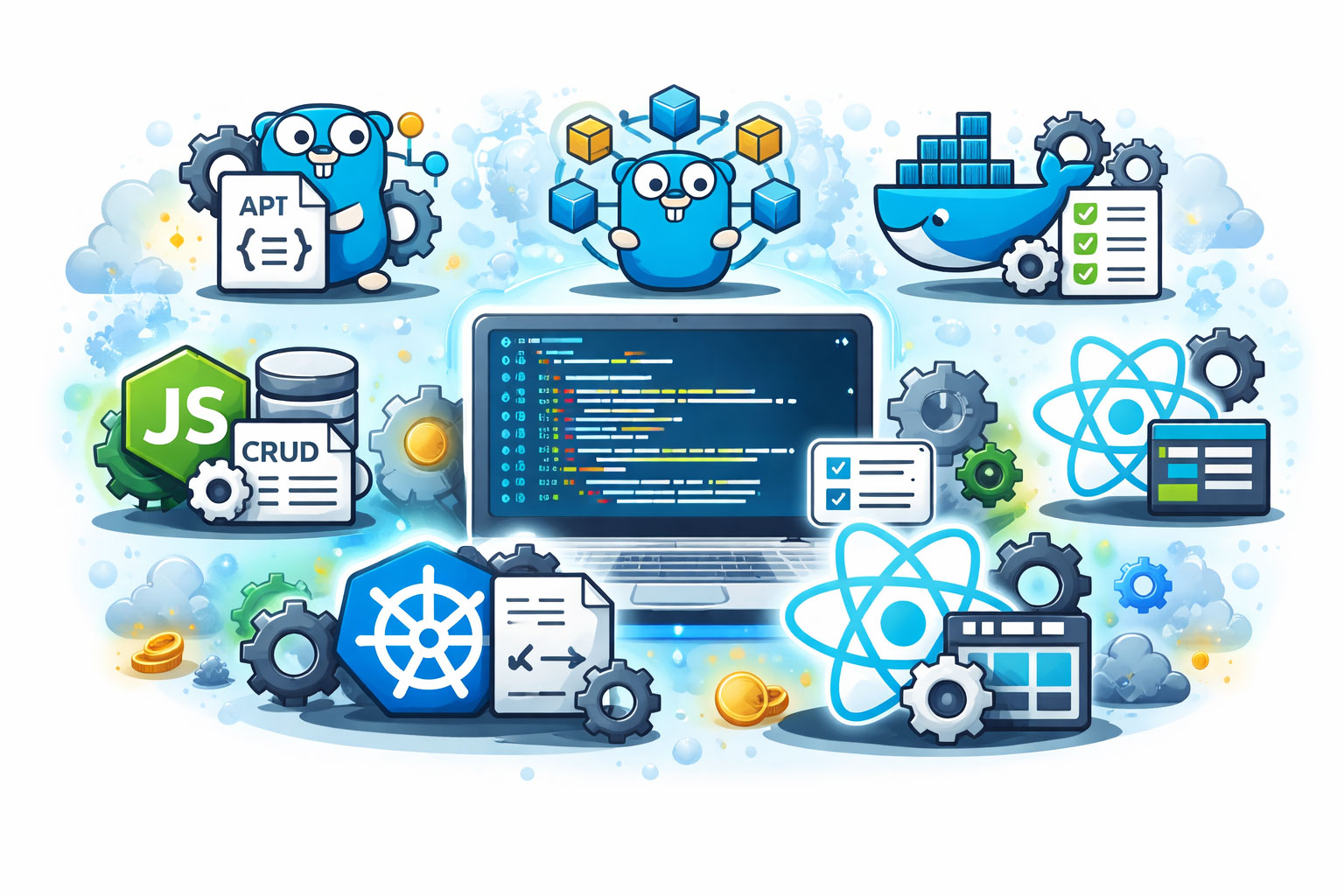
How Developers Build Production-Ready Golang APIs and Microservices in Minutes
Building a modern backend used to take days. Developers had to manually configure project structures, API routing, middleware, environment variables, and database connections before writing a single line of business logic. Today, the process is changing dramatically as automation tools make it possible to generate production-ready backend foundations within minutes.
Golang has become one of the most trusted languages for building scalable backend services. Its performance, concurrency model, and simplicity make it ideal for APIs, microservices, and high-traffic platforms. Many startups and technology companies now rely on Go to build reliable backend infrastructures.
However, even with Golang’s simplicity, developers still face repetitive setup tasks every time they start a new project. That is why modern developer workflows increasingly rely on generator tools that automatically create the essential backend structure.
This article expands the discussion from our main guide: 7 Powerful Developer Generators That Can Build Your Backend in Minutes.
Why Golang Is Ideal for Modern Backend Development
Over the past decade, Golang has rapidly grown into one of the most reliable backend technologies. Companies that require high-performance infrastructure often choose Go because of its lightweight design and efficient resource usage.
- High performance compiled language
- Built-in concurrency with goroutines
- Efficient memory management
- Fast compilation and deployment
- Strong support for cloud infrastructure
Because of these advantages, Golang is widely used for REST APIs, microservices architecture, DevOps tools, and distributed systems.
The Hidden Problem: Backend Boilerplate Code
Even though Golang is simple, building a backend project still requires writing repetitive boilerplate code. Developers often spend hours creating routing layers, middleware configuration, environment files, and database connections.
Typical backend setup tasks include:
- Creating controller and service layers
- Configuring routing and API endpoints
- Setting up middleware
- Creating database models
- Managing environment configuration
Although necessary, these tasks rarely contribute directly to application features.
Automating Backend Setup with Golang REST API Generator
To reduce repetitive setup work, developers can use the Golang REST API Generator.
This tool generates a clean backend architecture designed specifically for REST API development.
Generated structures usually include:
- API routing templates
- Controller and service layers
- Repository pattern structure
- Middleware templates
- Environment configuration
This allows developers to focus directly on building application logic.
Clean Architecture for Scalable API Projects
Using a generator ensures consistent architecture across projects. Most generators follow clean architecture principles that separate application layers.
- Controller layer
- Service layer
- Repository layer
- Model layer
- Configuration layer
This structure makes projects easier to maintain and scale.
Why Microservices Architecture Is Growing Rapidly
Modern cloud applications increasingly rely on microservices architecture. Instead of running a single large application, microservices break systems into smaller services that communicate with each other.
This architecture provides:
- Independent service deployment
- Better scalability
- Improved fault isolation
- Faster development cycles
Building Microservices Faster with Golang Microservice Generator
Developers can accelerate microservice development using the Golang Microservice Generator.
This generator creates microservice-ready project structures that support modern infrastructure.
- REST API services
- gRPC communication
- Redis caching integration
- Kafka or RabbitMQ event messaging
- Docker container configuration
Instead of configuring everything manually, developers can instantly generate a scalable backend foundation.
Integrating DevOps Tools for Production Deployment
Modern backend systems require container infrastructure and deployment automation.
Developers often use:
These tools generate container and deployment configurations that simplify application deployment.
Why Backend Generators Improve Developer Productivity
Automation tools significantly improve developer efficiency by reducing repetitive coding tasks.
- Faster project setup
- Consistent architecture
- Reduced configuration errors
- Improved development speed
For startups and fast-moving teams, these tools dramatically shorten development cycles.
Conclusion
Golang remains one of the most powerful technologies for building scalable backend systems. Combined with generator tools, developers can now build production-ready APIs and microservices in minutes.
Tools like Golang REST API Generator and Golang Microservice Generator provide a powerful starting point for building modern backend infrastructure.
By integrating these tools with containerization and DevOps automation, developers can create scalable backend systems ready for production environments.
Popular Posts




Popular Tools